*contains spoilers
Director William Girdler (1947-78 helicopter crash) made only nine features in his career which spanned the 1970s. Most are considered rubbish by the critics. But when you look at what Girdler did with so little money, you can’t be anything but impressed.
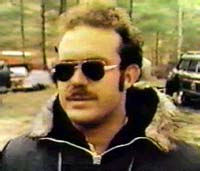
Born in Jefferson County, Kentucky in 1947 from one of the area’s most prominent and richest families, his love of movies blossomed at an early age and his passion shines through in his finished products.
Girdler had his own 35mm movie theatre at his house with seats from an actual theatre and he would show his friends movies he borrowed from the local cinemas after hours.
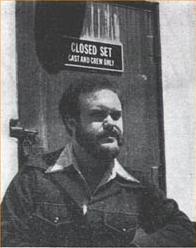
Girdler went to military school as a youth and after marrying his high school sweetheart at 17, joined the air force where he worked in the audio-visual department as a cameraman and an editor.
Having made documentaries and educational films while stationed in California, he returned to Louisville in 1970. It was there he made commercials using his grandfather’s warehouse as a studio – but he wanted to make a feature.
He had the personality to do it, as Girdler had a strong ego, was very strong willed and persuasive. He only stood five foot three or four but he was definitely diminutive. Throughout his career Girdler would be helped by a secretary named Claire Pearce who looked after his finances.
Five of the nine movies Girdler made were shot in his hometown of Louisville, Kentucky and seven of the nine would feature local theatre actor Charles Kissinger. In fact, Girdler kind of had a dream of films being made regularly in Louisville and showed off the city and its locations as best he could.
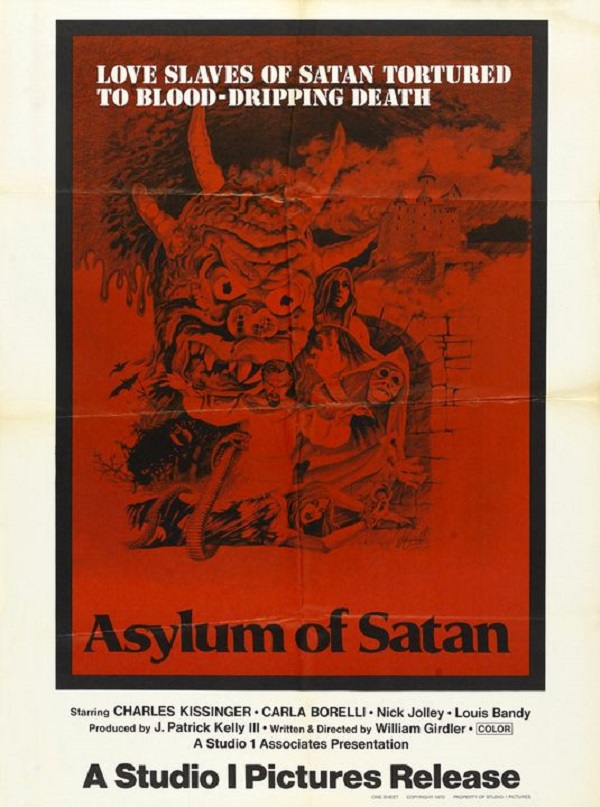
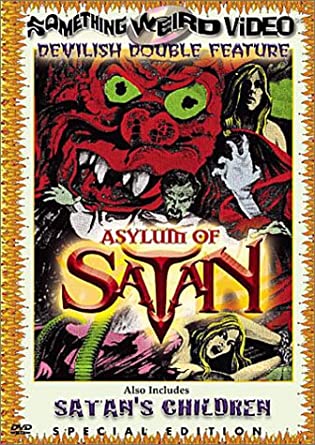
His first film was to be titled Spectrum of Satan aka Asylum of Satan (1972). And joining him on working on this film were the Asman brothers… cinematographer William, editor Bub and sound recordist John. They would help form the backbone of many Girdler films.

Asylum of Satan was written with brother in law Pat Kelly and was filmed for between $50,000 and $70,000 in late 1971. It was shot in 16mm and blown up to 35mm using what someone described as a “very energetic and dedicated” crew.
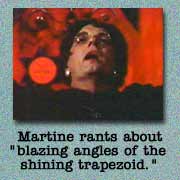
Starring Charles Kissinger (1924-91), he is the best thing about Asylum of Satan. In it he plays three roles, the first as the matronly Martine who helps run the Pleasant Hill Asylum where much of the action takes place, the second as Dr. Jason Specter who heads the asylum and the third as a handyman and caretaker.
Yes, Kissinger is in drag and I don’t know if we’re meant to notice his Adam’s apple and dubbed voice or not… as Martine introduces actress Carla Borelli (1942-) to her surroundings as she is locked in a hospital or asylum room.

“She doesn’t make a good impression,” says Borelli to herself about Martine.
Things get strange when Borelli is taken to the dining room where most of the other diners are sitting around tables wearing white hooded robes. Everyone except at her table.
“We don’t ask, it’s simpler that way,” says one of the few normal people there who are awaiting miracle cures for their disabilities from Dr Specter. It’s all very strange as Martine enters the dining room raising her arms dressed in black and suddenly Borelli is in an empty dining room covered in cobwebs… Poor girl, she’s either lost her mind, or something demonic is going on… guess which one!

Asylum of Satan is definitely a cheapie with no budget and no real stars. Kissinger came from local theatre and he also appeared as the Fearmonger on local Kentucky television where he was the host of a double feature of what I guess were horror movies. That was probably why Girdler used him. Girdler had ambitions beyond the local drive-ins though with other cast members such as Borelli.
The film was released in 1972 before The Exorcist (1973) arrived but long after Rosemary’s Baby (1968) and Girdler shows he has talent. However, it also shows that Girdler’s inexperience and lack of budget constrain this movie into the parameters of bad-moviedom for some – cult for others. It has something, a something which most of Girdler’s films have as they got progressively better.
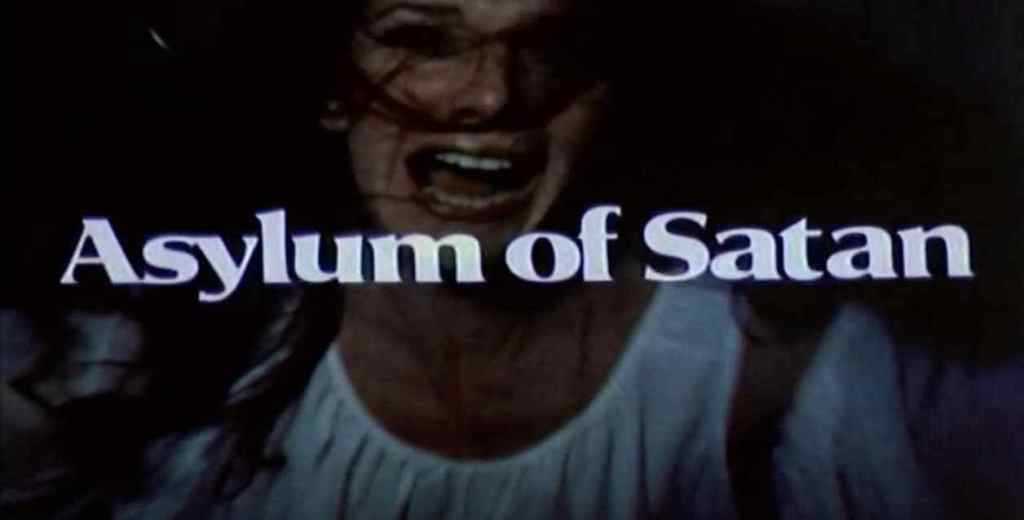
He calls himself William B. Girdler in the credits here and he would drop the initial for his ensuing films. Perhaps he didn’t want to be known as the Cecil B. De Mille of bad moviedom.
Nick Jolley (1948-97) plays Borelli’s boyfriend. Apparently, Jolley was another theatre actor and this is his only film role. Borelli meanwhile had been picked up because of her television appearances in such shows as Mannix (1967-75) and The Wild Wild West (1965-69).
Jolley also sings a song on the soundtrack… Dressed on loud 1970s checked pants and acting as if he’s a half-hearted long haired Clark Gable in the 1940s complete with moustache – Jolley is the only one who cares about Borelli’s transfer to the Pleasant Hill Asylum over a breakdown which she herself can’t remember.
Meanwhile one hospital resident dies from the special effects crew pointing fire extinguishers at her and covering her with rubber spiders! Do you get the vibe?

For some reason Dr Specter hasn’t aged despite being in his 90s and when Jolley goes to the police, they take him to the asylum again which doesn’t appear to have operated for over 20 years. It is here where Kissinger’s caretaker turns up only to get a one punch attack from Jolley for resembling Dr Specter.
Apparently, actor Kissinger served in the army during World War II. His role as the Fearmonger on Saturday nights ran from 1971 to 1974.
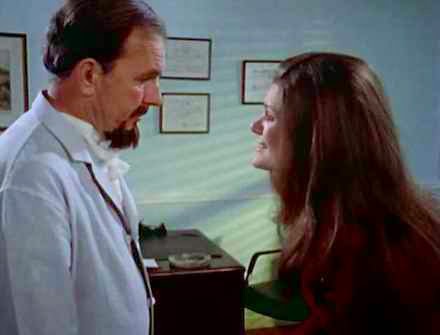
What will become of Borelli as her boyfriend seems to be in a parallel universe. She too! Certainly, there weren’t many parallel universe horror movies made in America by this time which is why Asylum of Satan has some originality when taken into context. It’s certainly a plot lifted from many a sci-fi teevee show of the 1960s.
With its dated funky guitar music predating Girdler’s blaxploitation movies – The Get-Man and Sheba Baby – we get another killing in the hospital’s indoor pool when snakes attack our poor victim. Yes, it’s a rubber one with fangs. Real snakes were used in the pool for some of the shots and no-one was game to stand-in for the actress and so it was Girdler’s sister who did the job. Furthermore, Borelli declined to do her nude scene.
The strange thing with this alternate universe is that even within Pleasant Hill, Borelli is not within it herself, as I mentioned, it shifts. The original title Spectrum of Satan is probably a cleverer title as it alludes to differing universes and the word spectrum is another for afterimage which is the image left over once the original image has gone. Kind of ghostly and haunting in a way. Anyway, the movie is strangely rewatchable as a result.
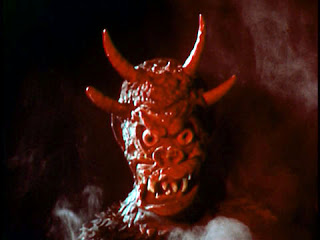
Jolley goes to the ruined hospital and brings back a head… and the police tell him that Dr Specter is long dead… Then there’s an appearance by Satan who turns up for a sacrifice. The costume was reportedly one left over from Rosemary’s Baby which had been used fleetingly in that movie because it is not terribly convincing. The sacrifice to Satan is for Dr Specter’s latest youthful fix and he plays the organ as he awaits the ceremony. As you do!
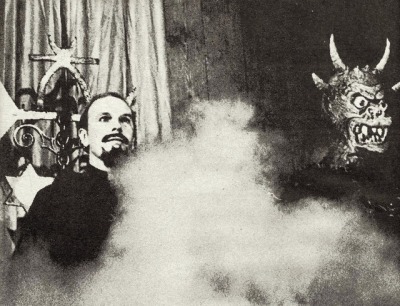
“I must get Martine,” Specter says suddenly and we’re not sure whether Specter is really a cross-dresser who puts on a fake beard. When Martine appears to woo the devil worshippers with an extended speech at the top of her rather manly voice: “Hail Satan!,” Martine punctuates the speech, ripping off a mask to reveal Specter! I guess there’s been better reveals in the movies. Specter seems to have had a whale of a time playing Martine and once again Kissinger does well in the triple role.
As for Satan, he looks like a distant relative of Zontar, the Thing from Venus and isn’t happy that Borelli isn’t really a virgin…. For a scene where Satan reportedly floats, he was pulled on a little red wagon by one of the crew.
Satan displeased, it’s time to turn the fire extinguishers on again, this time on Specter who bursts into flames anyway! Borelli awakes amid the cobwebs of the old hospital/asylum basement where the failed ritual took place…. Jolley looks back as he and Borelli leave the basement and he sees Satan for a moment surrounded by hooded demons and then as they leave the front door it seems for a moment the hospital is functioning again amid the thunder and lightning. Jolley is under Satan’s spell as he and Borelli get taken away by the police and the building is vacant again! Talk about spectrums!!
It’s probably an ambitious ending for a small picture and it takes several viewings to fathom it. I’m not completely sure it works. Cue funky guitar music and end credits.
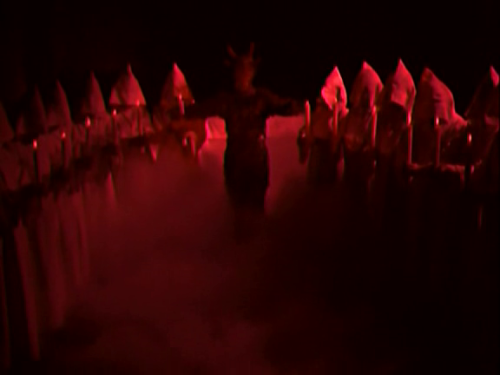
Apparently, The Church of Satan was consulted for the film and they tweaked the final scene’s dialogue and lent the production some props. They said they were pleased with the film.
If Girdler was “making money and films in that order” as it was said, then he failed with the release of Asylum of Satan. It was especially savaged by the local critics upon release who had followed its production.

Girdler was quoted in the Louisville Times: “Nobody saw Billy Friedkin’s or Steven Spielberg’s mistakes, but all my mistakes were right up there on the screen for everyone to see.”

Following the failure of the movie, Girdler could only raise $20,000 for his next production entitled Three on a Meathook (1972). Others chipped in for a $30,000 in total budget. There are some who said the film was really made for nearly nothing as it used film stock left over from Asylum of Satan.

Filmed in the Louisville warehouse studio and an abandoned farm, Three on a Meathook is Girdler’s first low-budget masterpiece. With its casual female nudity, exploitation elements of gore and a narrative style which is easy to take – compared to the parallel universes of Girdler’s first movie – this film also has a great twist in the tale.
“I used to date a guy once whose aftershave was so strong, he’d turn himself on,” says one girl on a boat trip to a swimming hole which will end in terror…

But that’s just the beginning as suspected murderer James Pickett (1949-94 AIDS) turns up in a rowboat and then later when the girls’ car breaks down… He takes them back home to his farm where his father, who is played by Charles Kissinger says: “I don’t want to be unreasonable but you know what happens to you when you get around women and it must never happen again.”
It’s a great set-up for the monumentally cheap Three on a Meathook.
What remains though are grainy teevee prints, which goes for a few of Girdler’s movies. This one was written by Girdler and is apparently based on the Ed Gein legend along with another element which has something to do with Pickett’s father’s smoked meats that get consumed during the movie.
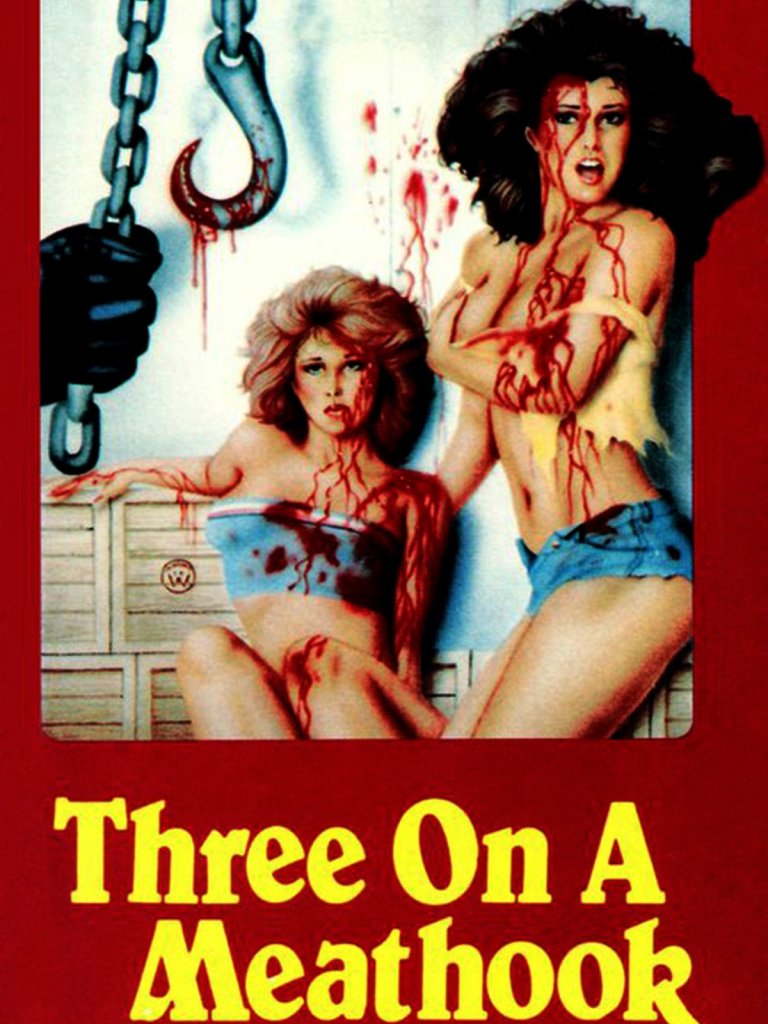
“Pa has a special way of smokin’ it,” is the line which immediately smacks of cannibalism.
So low budget was the movie that the actors had to provide their own wardrobe and in the scene where Pickett’s truck appears in the night, the engine wasn’t running and the crew had to push it into shot.

It’s a Psycho-type movie with knife and shotgun murders and Pickett is convincing as a seemingly naïve country bumpkin who may unconsciously like to slay women.
There’s a sense of put the camera in one spot and zoom and pan, rather than carefully storyboarded shots. There are a few quick edits for the murders. But this casual sort of feeling adds to the ‘reality’ of the movie with performances just as naïve as Pickett’s characters from the girls in the cast. After the girls are murdered there’s the “Oh, God” moment lifted from Psycho when Kissinger finds the bodies. Girdler must have loved that movie by Hitchcock like so many.
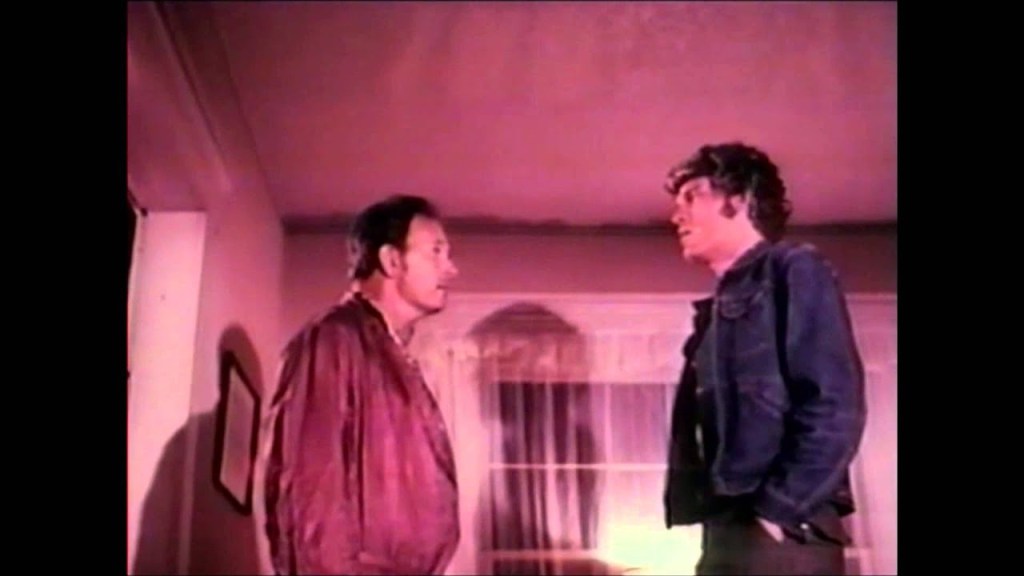
“Why didn’t you listen to me son? It’s too late now,” says his father.
Pickett is great in this movie and it’s hard to believe he’d only give two major film performances in his career. But that’s not to reduce Kissinger’s role as he anchors Three on a Meathook just as he did Asylum of Satan.
Pickett escapes from the farm and goes into Louisville… He can’t remember murdering the girls… “You didn’t remember the others Billy, it’s all right,” says his father.

He gets drunk in a bar and meets a waitress played by Sherry Steiner (1948-) who has one of those iconic monotone voices that lifts every now and then. Eventually, she and her girlfriend will visit Pickett’s farm. Silly girls…
There’s another Psycho element with Pickett visiting his mother’s grave at the local cemetery… But is she really buried there, just like Mrs Bates in Psycho?
Before Pickett goes to the bar, there is the almost self-love song You Gotta be Free by the band American Xpress, with its heavy guitar. Pickett is definitely not free at this moment of the movie and Girdler was good with contemporary music and the song is catchy if repetitive. The second song they play ends with the line: “Yes, we’re all insane.” Girdler’s choice of music may seem dated today but it still works in low budget context.
Pickett and his waitress friend and her girlfriend go to the farm and it all seems so innocent… There’s a dig at Vietnam when Sherry’s girlfriend goes into a monologue and tells of the love of her life getting “an invitation to die in one of their wars”.
Druken Pa or Paw serves his meat to his guests.
“Is it something special?”
“Paw has a special way of smokin’ it,” repeats Pickett.
The bloody special effects were engineered by Herschell Gordon Lewis (1929-2016) collaborator Pat Patterson aka J.G. Patterson Jr. (1930-75 cancer) and it’s reported that half of the effects created for the film ended up on the cutting room floor so the film would avoid an X Rating.

The movie plays out with Sherry getting saved from Kissinger’s meat cleaver… but that’s not the ending! See Three on a Meathook with its Psycho denouement in a psychiatrist’s office. Low budget excrement of a masterpiece? Only those who love Girdler will know the difference.
While this movie was not success, it drew the interest of Samuel Z. Arkoff of American International Pictures and Girdler was asked to make a couple of blaxploitation movies for them. The first was The Zebra Killer aka The Get-Man (1973). It hoped to use elements of Dirty Harry (1971) and the “Zebra” murders in San Francisco where black serial killers killed over a dozen white people.

“I’d shove it up your ass and pull the trigger,” says actor Austin Stoker (1943-) about his gun as he plays a less than perfect cop to the local pimp who he’s saved from being beaten to death by his ladies of the night.
Said actor Stoker about his character: “Girdler allowed you to show a more multifaceted character… if you’re a good guy you have to show what part of you is bad…” And vice versa. “If you’re allowed to do that, it’s a lot more satisfying. Bill Girdler allowed it.”

Stoker pointed out director John Carpenter was also from Kentucky and used his own music – just like Girdler. If only Girdler hadn’t died…
The Zebra Killer of the movie is a black man according to witnesses and he doesn’t mind blowing up families who have three children with car bombs.

The first couple of times I watched The Zebra Killer, I couldn’t focus. It was probably because the print I was watching was so bad. But upon a third viewing – it’s not a bad movie. The killer using scalpel, bomb, sledgehammer has one hell of a modus operandi… maybe he’s just insane. Which of course he is!

“Even lonely detectives have to answer when nature calls,” says Stoker in one of the best lines in the movie as he chases a killer who he describes as “one smart mother”.
Using its Louisville locations to advantage, there’s a night scene with The Belle of Louisville, a paddle-boat which still operates on the Ohio river for functions and tours.

James Pickett in his second and last major film makes a great serial killer. He was effective in Three on a Meathook, even if that was, ultimately, for the opposite reason.
Stoker’s cop threatens his boss with the fact that he’s going to get laid and has a long late night dinner rather than solve the case which has a number of corpses piling up. And Pickett fools us all in the first half of the movie, although I thought the killer looked suspiciously like Gene Wilder (1933-2016 Alzheimer’s disease) in shoe polish trying to avoid police in Silver Streak (1976) and I was right! It’s a white man in shoe polish!!

Pickett, who was gay, would move to California where he worked as a successful playwright and poet. He died of AIDS in 1994 after creating two cult performances on film.
In The Zebra Killer, Pickett’s father has died of natural causes while waiting for the electric chair. It has driven Pickett mad who laughs and cries and gets angry at a drop of a hat. He’s killing all those involved with his father’s conviction.
Charles Kissinger’s role is less than it had been in the previous two Girdler movies but he would continue in a few more. And the film is dedicated to the officers of the Louisville Police Department.
Due to its racial content many theatres upon the film’s release dropped it, while others mistook it as a documentary about the real killings. Anyway, it tanked.
The best William Girdler films are yet to come in PART TWO
 Cult Film Alley