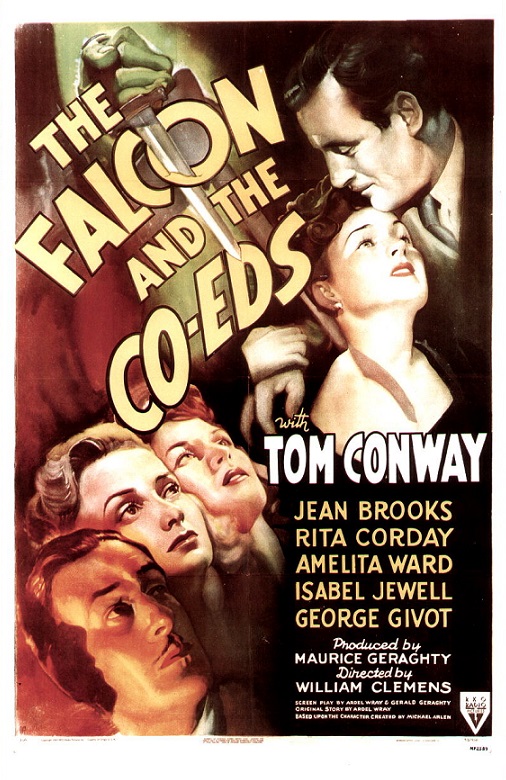
“Just how good an actress are you?,” asks Tom Conway (1904-67 cirrhosis) of Jean Brooks (1915-63 hepatitis and cirrhosis) in The Falcon and the Co-eds (1943). And that is the question.
If ever there was an actress who was unremarkable it was Jean Brooks. Yet this actress who was doomed to a life of alcoholism was vulnerable in her appearance and yet put on a front that was tough and probably not tough enough. She had her demons and there was a bit of madness underneath, calculating at times but it’s perhaps for all these reasons that she had to find solace in the bottle.
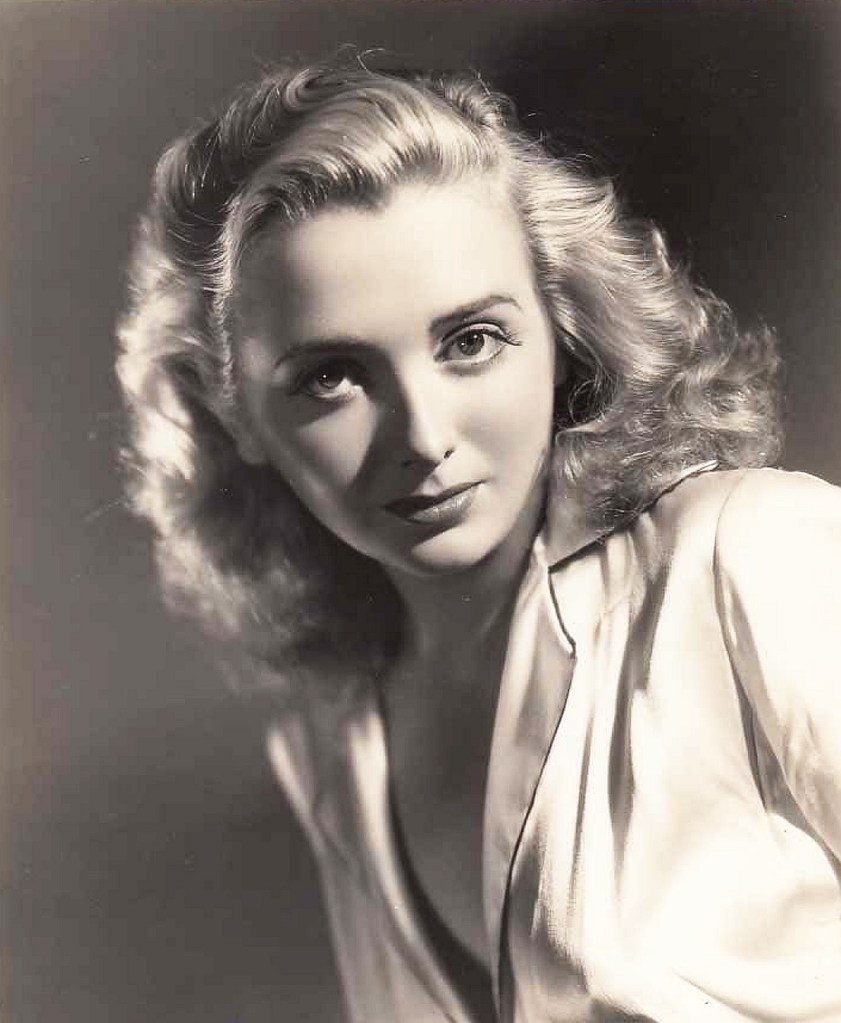


Jean Brooks is probably best known for her role in the Val Lewton (1904-51 heart attack) low-budget horror movie The Seventh Victim (1943). In it, she donned a black wig as she played the possibly doomed satanist who is given no choice but to use a noose in her rooming house as her fellow Satanists found her unworthy once they had scammed her for every cent she had.
It was 1943 which was a big year for Jean as she made several notable B-pictures including a number of the Falcon films. It was after this year that she started to drink heavily and it is also reported that she suffered from bulimia which makes sense due to her weight problems and the fact it changes heavily from scene to scene in many movies. This can be noted in The Leopard Man (1943) in which she was awfully skinny at the beginning and yet by the end of the movie she has put on weight. The makeup department was often called in to fix the ‘problem’.
Jean was born in Houston according to reports and lived in Texas before moving to Costa Rica to live on her grandfather’s coffee plantation. I don’t know how reliable the data is but Jean was bilingual as a result and this would be used when she made a trio of films in Spanish. She could also sing and was probably passed over for Jane Greer (1924-2001 cancer) for the singing roles in the Falcon. It is sad as this woman who was not particularly beautiful in the Hollywood sense probably knew this along with the fact she wouldn’t be a star or ever get a star on the Hollywood Walk of Fame. How do you escape yourself and your reputation? It can drive a person close to the edge, especially in a place like Hollywood where there is constant pressure to behave in terms of the spotlight.
To look at Jean’s early roles in the 1930s and you have primitive Erich Von Stroheim (1885-1957 no cause) movie The Crime of Dr Crespi (1935). Typical of Jean’s early movie credits all she does is give good phone and scream convincingly. I haven’t seen her Spanish films she made around 1939 but she plays a character named Nina and is credited as Robina Duarte. She was regularly credited as Jeanne Kelly before 1940 which was her maiden name before she married the future director Richard Brooks for a few years before the wheels fell off.


The best movies to watch are the Lewton and Falcon ones. The Falcon movies are better than people think and good old Tom Conway needs to be reappraised himself. The Falcon movies are slick RKO B-movie productions with pep and a sense of class. Jean appears in several of them including the near classic The Falcon and the Co-eds (1943). In that one she is at home among the girls as a drama teacher in that countryside college which has been haunted by a murder and it is possibly a psychic one. She is also good in what little screen time she has in The Falcon in Danger (1943) although she seems a little old to be running away crying “I’ll never speak to you again” like some ten or twelve year old girl.
It was The Seventh Victim for which Jean may be most iconically remembered and the movie with its poet named Jason who cannot write has Conway again as the man who wants to help find the nest of devil worshippers and even a man like he is kind of scared in their den as they deal poison to those who have betrayed them.
The Seventh Victim is a movie which can be watched countless times and perhaps inspired Hitchcock’s shower scene from Psycho with a very young Kim Hunter (1922-2002 heart attack) being warned by a figure behind the shower curtain to beware sticking her nose into places where it doesn’t belong. Jeans’ screen time is short but her Jacqueline is memorable. Once again it must be noted that Jean does not star in any movies and her scenes are often short ones as she never graduated to a starring role.
Jean was also in the Conway movies which are not Falcon movies named A Night of Adventure (1944) and Two O’Clock Courage (1945). You get the idea that Jean and Conway knew each other well and that they were possibly even drinking buddies in a brother and sister type of way. And you wonder if the sudden demise of Jean’s career was due to her being arrested for drunken or unruly behaviour or whether she was put forcibly into rehab. These are purely suppositions but something happened. There were reports of Jean turning up drunk to premieres or gala events to the point where she was tripping over. These were firsthand from Jane Greer and another person mentioned was Marsha Hunt (1917-2022 natural causes). If she got caught up in the drinking crew of Conway and that circle who knows. It is interesting to note that both Jean and Conway had crooked teeth while Jean had eyes you could describe as luminous and almost Bette Davis eyes if you want to call them that.

Jean was not what you would term a great actress but to use the quote about being a ‘good actress’ and you could add sexual overtone… Jean cried no tears and she was often called in to perform as the bad girl or the troubled one. She was definitely not a society type although for two of the Falcon movies she is decked out in stylish frocks which are rather modern. Her figure could be called matronly and yet she is chosen as the modern woman. Otherwise the producers were having a joke on Jean because of her figure which was not skinny in these movies and not hourglass. You didn’t stick to your diet so we are going to humiliate you. It’s easy to criticise Jean Brooks and you are probably wondering why I am even bothering to write about her. But she was just so… Jean Brooks.
It was around the 1944 mark that Jean hit the skids with the Val Lewton production Youth Runs Wild (1944) which was about juvenile delinquency and I wonder if it was an ironic poke to put the almost thirty year old Jean in this movie. I can’t track down source material.


After Two O’Clock Courage (1945) which is about murder one drunken evening and may have Jean as the culprit, she seems to have been excised from The Falcon’s Alibi (1945) despite high billing and so the pincers at the studio seemed to have been at work in ending Jean Brooks’ career.
She would only make a couple more movies and one of them was the forgotten Republic picture Women in the Night (1948). While not a great movie and probably not even a good movie this one is of note anyway. The film opens strangely enough with two forwards and it tells how hostesses at the officer’s club behind enemy lines helped win World War Two one way or another. As one forward said of the hostesses: “They aroused public opinion.”
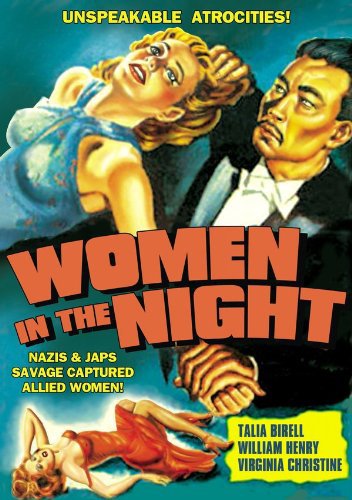
The film stars poverty row actress Talia Birell (1907-58) among the beautiful framing of women’s faces. Other forgotten names are tv fave Virginia Christine (1920-1996 heart disease) and Bernadene Hayes (1912-87 heart problems).
As for Jean, she appears at the beginning of the movie where she fends off a Nazi officer who tries to rape her and during the movie she wears heavy makeup to disguise her weight.
This strange movie is perhaps useless at the box office in that it was post-war and this was a period when the public wanted to forget about war and move on with their lives. Still it’s well made and better than most forgettable Republic productions.
The girls offer “pleasant, friendly companionship” to the Nazis and when Brooks makes her main appearance in the movie she is wearing a wig very similar to the one she wore in The Seventh Victim which goes to show how much of an icon she had already begun and perhaps how it would be seen as the ultimate bookend to a broken career.
“Would you trust her?,” someone remarks.
The architecture in the movie seems to suggest it really was filmed in Mexico as it is reported by the little known director William Rowland (1898-1983).
Jean’s eyes are deeply shadowed and yet the allure was still there. Her looks were yet to fail.
“I missed you,” Jean is told with lesbian overtones as she glides around in a black dress like a black widow. There are no real stars as it’s an ensemble piece and such is the plot also with hints of some non-existent cosmic ray. Jean is the most interesting character in Women in the Night – she is a spy, a collaborator, double agent, murderess and bisexual.
Oscar winner Eugen Schufftan (1893-1977) is credited somewhere for the cinematography and the quality shows as well as it harks back to silent movies like Metropolis and The Big Parade.
Jean bookends this movie but once again she is given little dialogue and we must rely on her ever so slight iconographic self as she literally goes up in flames in a fingernail piercing cat fight.

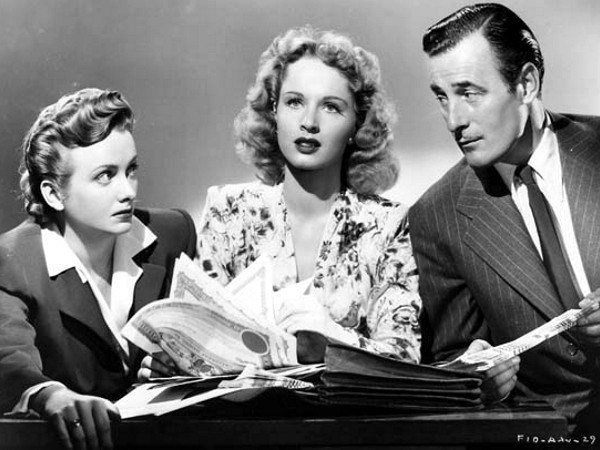

So poor Jean her career overall with herself to blame, or was it she just didn’t click because she wasn’t gorgeous. Her voice was certainly interesting. Maybe she didn’t sleep with the right people or slept with all the wrong people. Perhaps she couldn’t sleep at all.
Jean went to San Francisco and dropped out of sight. Even her first husband didn’t know of her whereabouts. She married again and it is said sold advertisements for the local newspaper. She also drank too much to the point where she died of hepatitis and liver disease a few days after the Kennedy assassination. Her death certificate noted malnutrition and the fact that she was only 47 years old. Bad girl, or just misunderstood and lost? Or just another drunk? Jean I can feel you crying out inside, I feel your hurt and your pain …. I like your voice and your eyes … No your bum doesn’t look big in that … Wanna get a drink?
 Cult Film Alley